

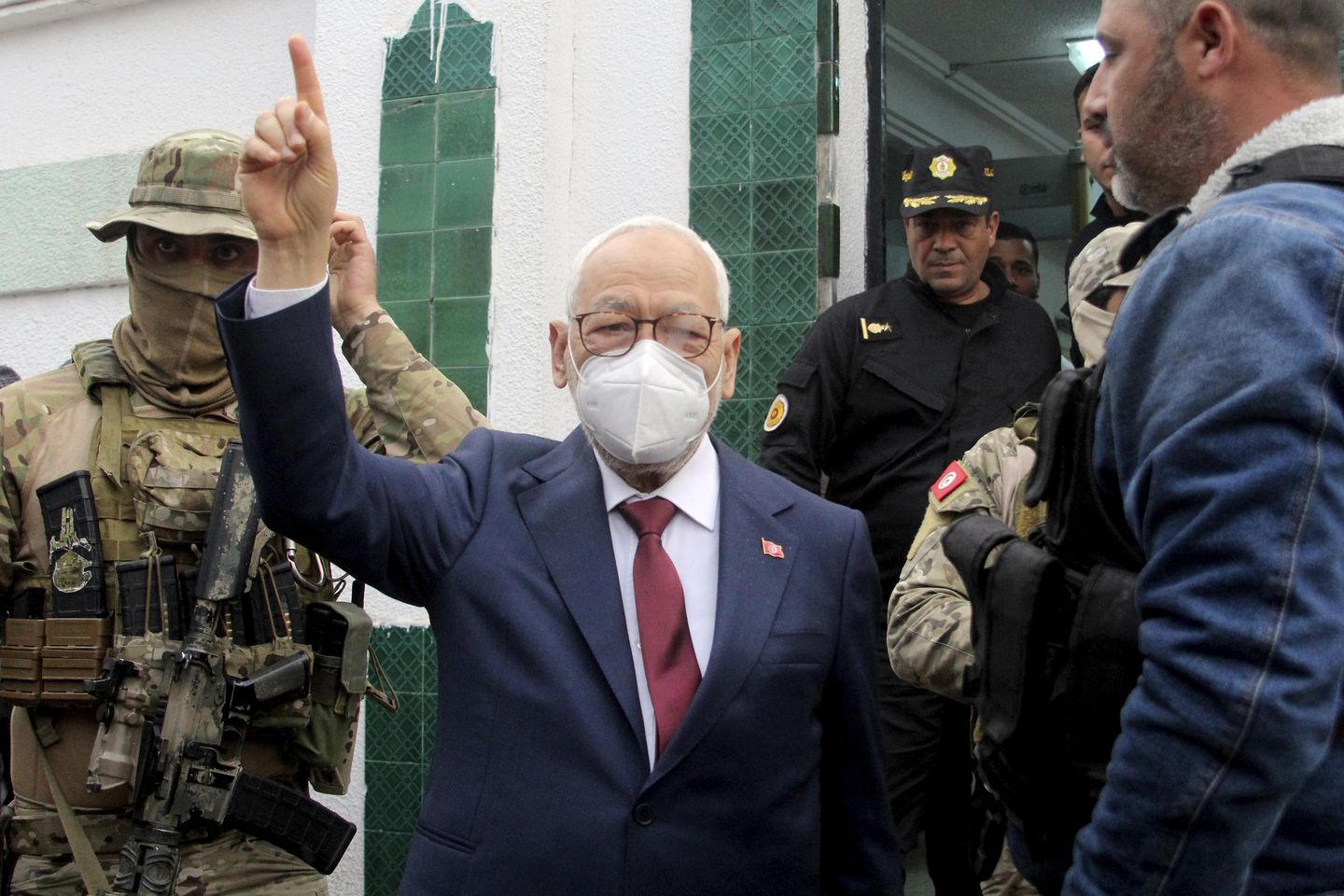
Four years after President Kais Saied began consolidating power, citizens of Tunisia protested, citing a decline in democratic freedoms. The initial move, which occurred on July 25, 2021, involved suspending parliament, dismissing the prime minister, and invoking a state of emergency, allowing Saied to rule by decree.
While some initially supported these actions, many critics viewed them as a coup, signaling the beginning of a slide towards authoritarianism in a nation once celebrated as the birthplace of the Arab Spring.
Demonstrators marched through the capital, chanting slogans like “no fear, no terror, power to the people,” and displaying portraits of political prisoners. Organizers symbolically carried a cage, representing the perceived state of political life in Tunisia under the current regime.
Several prominent opposition figures, including Rached Ghannouchi, head of the Islamist Ennahda party, and Abir Moussi, leader of the right-wing Free Destourian Party, are currently imprisoned. Women played a significant role in the protests, specifically demanding the release of imprisoned opposition members, including Moussi and attorney Sonia Dahmani.
Since the power grab, Tunisia’s civil society has faced increasing suppression. Activists, journalists, dissidents, and opposition figures have been subjected to imprisonment, often on charges of undermining state security. July 25, originally the anniversary of Tunisia’s declaration as a republic in 1957, has become a focal point for both pro- and anti-Saied movements.
One former government minister lamented that Saied had redefined the meaning of the day, transforming it from a celebration of the Republic’s founding to a marker of its dismantling, emphasizing the dangers of unchecked power.
These political developments are occurring against a backdrop of economic difficulties and growing public dissatisfaction. Reports indicate an intensified crackdown on opposition voices and the use of vague legal justifications to target marginalized groups within Tunisia.
