
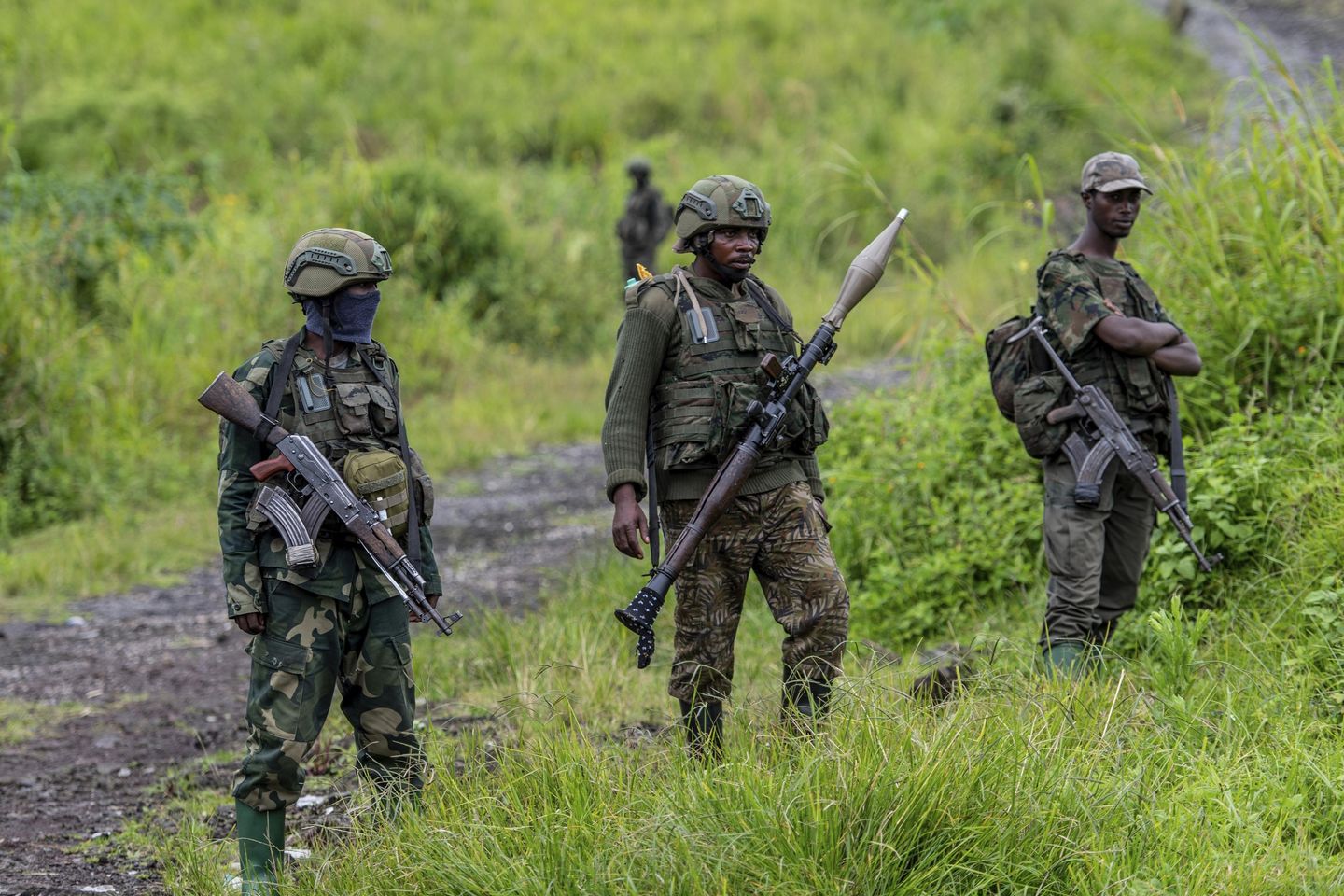
In a significant move towards ending decades of conflict, Congo and Rwanda-backed rebels, known as M23, have signed a declaration of principles in Qatar. The agreement aims to facilitate a comprehensive peace agreement, with a key focus on restoring state authority in eastern cities currently under insurgent control.
The declaration outlines a commitment from both Congo and the M23 rebels to “building trust.” This will be achieved through various measures, including the exchange of prisoners and detainees. Crucially, it also includes the restoration of state authority in all parts of the country, encompassing areas presently held by the rebel group, as stated by Qatar’s minister of state, Mohammed bin Abdulaziz bin Saleh Al-Khulaifi.
While the declaration marks a positive step, ambiguity remains regarding the specifics of its implementation. Notably, there are differing interpretations between the parties regarding the withdrawal of M23 from the cities they currently control.
Bertrand Bisimwa, a leader within the M23, clarified that the declaration is “not a question of withdrawal but of mechanisms for empowering the state, enabling it to assume its prerogatives and obligations.” This suggests a focus on integrating state functions within the existing M23-controlled areas rather than a complete pullout. M23 spokesman Lawrence Kanyuka emphasized this point, stating, “We are in Goma with the population and we are not going to get out.”
Conversely, Congolese government spokesman Patrick Muyaya presented a different perspective. He asserted that the declaration takes into account “the non-negotiable withdrawal” of the rebels, which would then be followed by the deployment of government forces and institutions.
The M23, supported by neighboring Rwanda, is a major player among the numerous armed groups vying for control in Congo’s resource-rich eastern region. The conflict has had devastating consequences, displacing an estimated 7 million people in Congo. The United Nations has characterized the situation in eastern Congo as “one of the most protracted, complex, serious humanitarian crises on Earth.”
The signing represents the first direct commitment between the two sides since the rebels’ significant advances earlier this year, which saw them seize key cities in eastern Congo. The declaration sets a deadline of August 18 for the signing of a final peace deal. This final agreement is expected to align with the Peace Agreement previously brokered by the U.S. between Congo and Rwanda in June.
A key demand from the M23 has been the release of its members currently detained by Congo’s military, many of whom face severe penalties, including the death sentence. In return, Congo has been demanding the withdrawal of the rebels from the territories they have seized.
The Qatari minister emphasized the significance of the declaration, stating, “The Declaration of Principles signed today paves the way for direct negotiations towards a comprehensive peace that addresses the deep-rooted causes of the conflict.”
The Rwandan Foreign Affairs Ministry echoed this sentiment, calling it “a significant step forward” towards ending the ongoing conflict. The U.S. State Department also released a statement reaffirming America’s commitment to supporting “a peace that results in the restoration of (Congolese) authority and inclusive governance” in the region.
In Goma, a city heavily impacted by the conflict, the news of the signing was met with mixed reactions. Many locals expressed skepticism about the possibility of achieving lasting peace without addressing the needs of the victims of the decades-long conflict.
“We cannot build peace without justice and reparation,” stated Amani Muisa, a resident of Goma, reflecting the concerns of many who feel that accountability and redress are essential for a sustainable resolution.
The declaration also addresses key aspects of the peace deal signed by Congo and Rwanda on June 27, including the protection and safe return of the millions of people displaced by the conflict.
Massad Boulos, a senior advisor to a U.S. President who participated in the Doha-led talks, emphasized the urgency of the situation, stating, “It is time to find a final solution” to the conflict. He reiterated the importance of affirming state control in rebel-held territories as a crucial element of any lasting agreement.
Boulos further noted, “The issue requires dialogue, and following up on this dialogue and requires persistence,” highlighting the need for sustained engagement and commitment from all parties involved.
Another significant challenge that both sides must confront is the issue of Rwanda’s alleged support for the rebels, including the presence of thousands of Rwandan troops in eastern Congo, as reported by United Nations experts.
During the signing of the peace deal in Washington, the Rwandan Foreign Minister indicated that Rwanda would lift its “defensive measures” – seemingly referring to its troops in eastern Congo – once Congo neutralizes an armed group that Kigali accuses of involvement in the 1994 genocide in Rwanda.
Analysts have expressed doubts about the feasibility of the M23 rebels withdrawing from key eastern Congolese cities such as Goma and Bukavu. They suggest that such a withdrawal would depend heavily on the concessions that Congolese authorities are willing to make. Furthermore, concerns remain that lasting peace may be unattainable without addressing the issue of justice for the victims of the conflict.
