

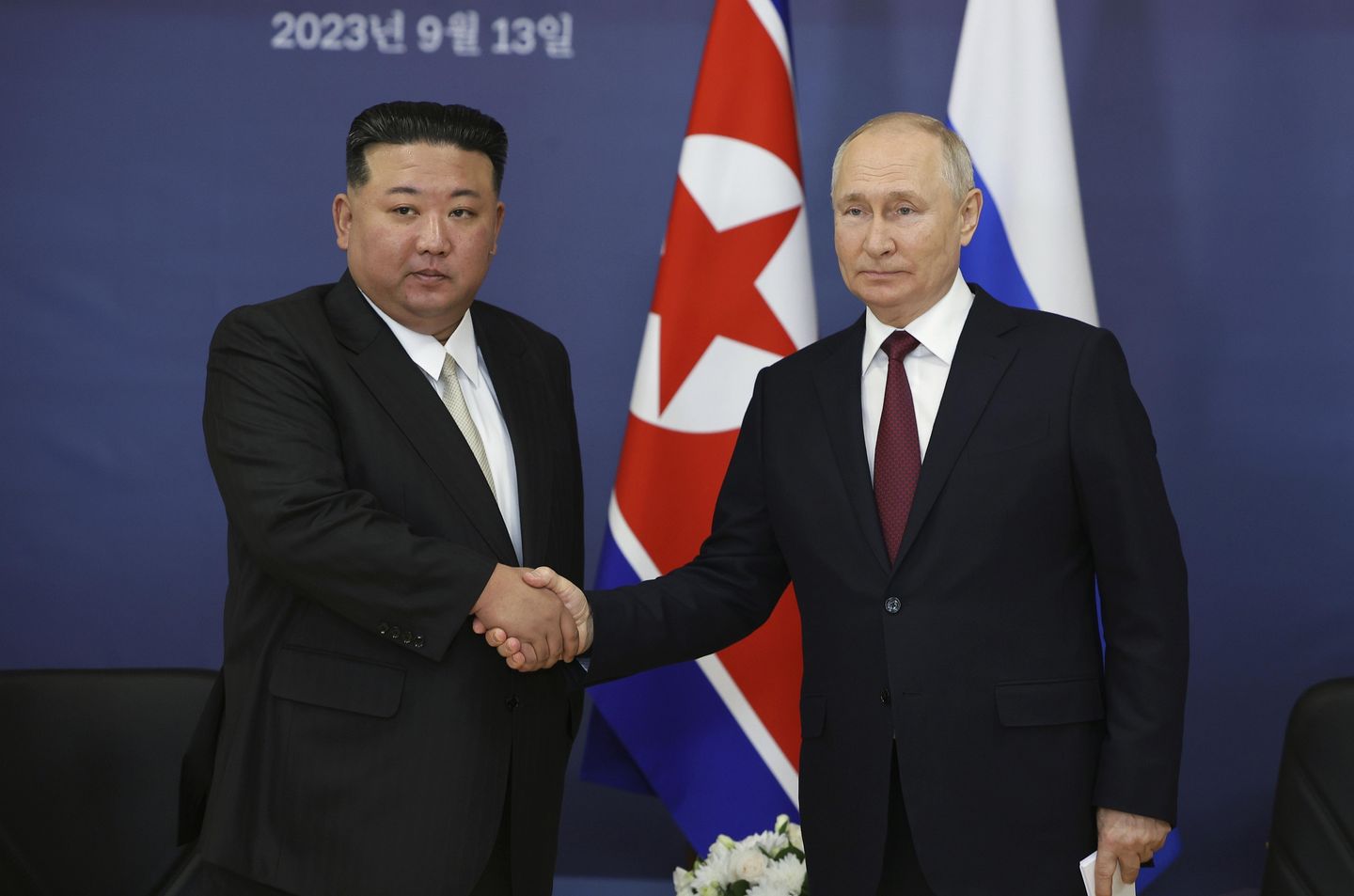
A leading expert suggests that the burgeoning alliance between Russia and North Korea is forging a new world order, one that a weakened West is ill-prepared to confront. The expert highlights North Korea’s unique position, stating that it is currently the only nation both capable and willing to supply Russia with ammunition and potentially deploy troops to the front lines. He notes that North Korean soldiers have shown promise, suggesting that their effectiveness will only increase as they gain experience with modern warfare technologies.
The partnership formalized in 2024 by Russian President Vladimir Putin and North Korean leader Kim Jong-un is described as “purely transactional,” yet highly beneficial for North Korea. Intelligence reports indicate that North Korea has already supplied Russia with a substantial quantity of artillery shells, numbering in the millions, and deployed thousands of troops.
The scale of North Korea’s military involvement is sustainable, given its substantial armed forces. According to a recent report, North Korea possesses the world’s fourth-largest army, surpassing even Russia in troop numbers. While a significant portion of this force may be of lower quality, a considerable number are considered elite soldiers.
While there’s ongoing debate about the cohesiveness of the so-called “CRINK” axis – China, Russia, Iran, and North Korea – the expert cautions against overemphasizing ideology as the driving force. He posits that the emerging global landscape resembles the 18th century, where alliances were primarily based on pragmatic interests rather than shared beliefs.
The deployment of North Korean troops to Russia could signify the emergence of a new, cynical business model, reminiscent of the Swiss mercenaries of medieval Europe. North Korea could potentially generate revenue by deploying its military units to support friendly governments worldwide.
With the resurgence of large-scale conflict, both Russia and North Korea are accumulating valuable combat experience, potentially surpassing that of Western nations. This development underscores the need for developed countries to prepare for real wars, rather than solely engaging in punitive expeditions against developing nations, a type of conflict that was previously considered a relic of the past.
For decades, Russia viewed North Korea with skepticism, a perception that largely persists. However, despite any reservations, Russia recognizes North Korea as its primary ally in the current conflict. As Russia faces increasing isolation, similar to what North Korea has endured for years, new opportunities arise for Pyongyang.
Given Russia’s reluctance to rely heavily on conscripted soldiers in combat, North Korea’s support becomes even more crucial. The Russian government understands that deploying draftees could significantly undermine public support, which remains remarkably high at present.
Despite sustaining heavy casualties, North Korean troops deployed in specific regions have been assessed as being in better physical condition, more cohesive, more aggressive, and possessing superior marksmanship skills compared to their Russian counterparts. The increasing financial incentives offered by the Kremlin for contract soldiers also make North Korean troops an economically attractive option.
While the precise compensation provided to North Korea for its soldiers remains undisclosed, it is highly probable that they are a more cost-effective alternative to Russian volunteers. Currently, North Korean troops have been primarily stationed within Russian territory, refraining from direct combat in Ukraine. One source suggests this policy is likely to continue, as Putin seeks to avoid triggering NATO intervention by deploying North Korean troops in Ukraine.
Nevertheless, North Korean forces can free up Russian troops for operations by guarding borders and strategic installations. However, the expert believes that if the conflict prolongs, North Korean troops will eventually be deployed within Ukraine.
Evidence of Russia’s reciprocation to North Korea is emerging. Ukrainian sources have observed increased accuracy in North Korean ballistic missiles, suggesting the transfer of guidance technologies. Russia is also suspected of providing drone-manufacturing technologies.
Russian air-defense systems have been identified within North Korea, and there are indications of potential transfers of naval propulsion and command systems. North Korea, which faces geographical limitations for agriculture, is receiving food supplies.
Reports on Russian online platforms mention the presence of Russian chocolate, canned goods, and sausage in Pyongyang shops. Furthermore, North Korean media outlets are highlighting the health benefits of wheat flour and baked goods, further indicating Russian supply. Transport infrastructure across the North Korea-Russia border is being expanded.
In addition to the existing cross-border rail bridge, a road bridge is under construction. Following the Russian Foreign Minister’s visit to Wonsan, regular flights between Moscow and Pyongyang have been announced. While North Korea’s power grid does not rely on natural gas, the expert believes that Russia is not supplying significant amounts of oil. This leaves Pyongyang dependent on Beijing for fuel, supplied through a dedicated pipeline under the Yalu River.
Labor represents another area of cooperation. Russia has announced plans to import North Korean engineering and labor units. Given the underpopulation of the Russian Far East, civilian labor could be exported from North Korea. The expert estimates that North Korea could potentially send several hundred thousand citizens, drawing a parallel to the Philippines’ significant foreign exchange earnings from labor exports.
Looking ahead, the expert emphasizes that Russia currently needs North Korea. He expresses doubt about the long-term sustainability of the current level of intensity in the conflict, suggesting that Ukrainian resistance might unexpectedly collapse, similar to Germany in 1918. Alternatively, a protracted, lower-intensity stalemate could develop.
Regardless of the specific outcome, both North Korea and Russia are experiencing surprising levels of prosperity, and both regimes appear secure. The expert underscores the importance of perceiving the world as it exists, rather than as one desires it to be.
The West will need to rediscover the ability to mobilize and endure economic sacrifices, while also reevaluating certain liberal ideals. In the post-Cold War era, the West could afford to discard traditional notions of patriotism, as the world seemed relatively safe. However, a renewed emphasis on strong shared identities, potentially along the lines of Israeli or Turkish models, may now be necessary.
Historically, history education was used to cultivate a sense of national pride, often with a touch of chauvinism, which was considered beneficial for preparing citizens for potential military service. While this approach was arguably more propaganda than accurate history, it was deemed a necessary evil and may once again become a necessary evil in the current global climate.
