

The U.S. military is exploring strategies to create overwhelming chaos on the battlefield, aiming to disrupt and neutralize enemy forces. This concept involves saturating the operational environment with a multitude of unmanned systems, weapons, and other assets to overwhelm adversaries and prevent them from effectively responding.
One vision of this strategy envisions a “hellscape” dominated by drone swarms and other advanced technologies, making it difficult for enemies to operate effectively. This approach is gaining traction within the Pentagon and among national security experts, particularly in the context of potential conflicts in the Pacific theater involving China.
The defense industry is adapting to this evolving landscape, shifting its focus from large, expensive weapons systems to smaller, more affordable, and expendable unmanned assets that can be produced and deployed in large numbers.
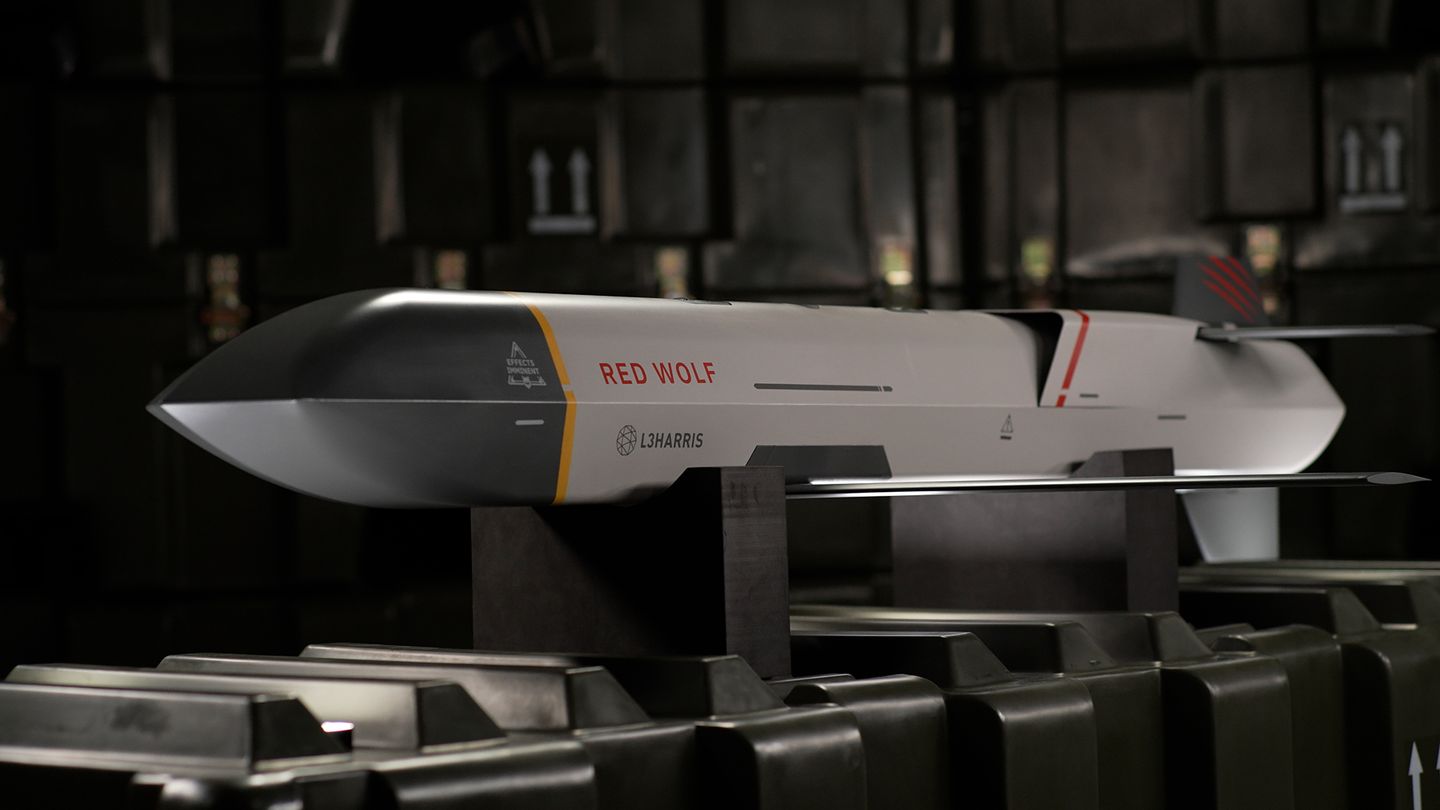
L3 Harris, a long-standing defense contractor, is developing its “Wolfpack” system to address this emerging need. The Wolfpack consists of the “Red Wolf” and “Green Wolf” vehicles, designed as modular systems that can be launched from various platforms, including air, sea, and land.
Jen Lewis, the president of airborne combat systems at L3 Harris, described the Red Wolf as a long-range strike vehicle, capable of targeting enemy ships and other assets from a considerable distance. The Green Wolf, on the other hand, is an electronic warfare platform equipped with electronic attack and detection capabilities, allowing it to identify, locate, and report enemy activity.
The company envisions launching these vehicles in tandem, combining kinetic and non-kinetic effects. Lewis highlighted the potential for these vehicles to act as decoys, track targets, and relay communications, further enhancing their effectiveness. The vehicles are also equipped with software that enables autonomous swarming capabilities.
The concept of “drone swarms” is central to the “hellscape” model being explored by the U.S. military. Adm. Sam Paparo, commander of U.S. Indo-Pacific Command, believes that creating such an environment would deter potential adversaries, such as China’s People’s Liberation Army, and provide the U.S. with critical time to deploy additional air and naval assets to the region.
Matthew Klunder, L3 Harris’ vice president of Navy and Marine Corps accounts, characterized the desired effect as “unbelievable chaos.” He pointed to recent conflicts and tensions in Ukraine, the Middle East, the Red Sea, and the Indo-Pacific region as evidence of the value of affordable mass weapons and small drones. The Wolfpack system represents a significant advancement in this area.
Klunder emphasized that the goal is to create an asymmetrical advantage that disrupts adversaries. By overwhelming them with a massive influx of weapons, the U.S. military aims to cripple their command and control capabilities and make it exceedingly difficult to mount an effective defense.
The deployment strategy involves attaching multiple Red or Green Wolf vehicles to various platforms, such as helicopters, fixed-wing aircraft, and large drones. This allows the U.S. military to saturate a battle zone with numerous assets launched from a safe distance, minimizing the risk to personnel.
Lewis noted that L3 Harris has tested its new products at ranges exceeding 200 nautical miles, making them well-suited for operations in the vast Pacific Ocean.
Such capabilities align with the Pentagon’s broader strategy of establishing “drone dominance” across the U.S. military. This involves streamlining regulations and accelerating the production of small, affordable unmanned vehicles.
Affordability is a critical factor in this shift. Creating drone swarms and “hellscapes” across expansive battlefields becomes impractical and prohibitively expensive if the individual craft cost tens of millions of dollars. Similarly, the limited availability and high cost of long-range missiles and other munitions can restrict military commanders’ options.
The focus is now on developing small drones, precision-strike capabilities, and other assets that can be mass-produced at a price point in the hundreds of thousands, rather than millions, of dollars per unit.
Klunder explained that the Wolfpack provides warfighters with a missile, a weapon, and a non-kinetic platform that allows them to operate outside of weapons engagement zones, offering greater flexibility and affordability.
He highlighted the significant cost savings, stating that the Wolfpack is currently five to six times cheaper than many operational missiles with similar or even better ranges. These price considerations will become increasingly important as technology continues to advance.
Ultimately, Lewis concluded that achieving the desired level of chaos and affordable mass requires a fundamental rethinking of cost structures.
