

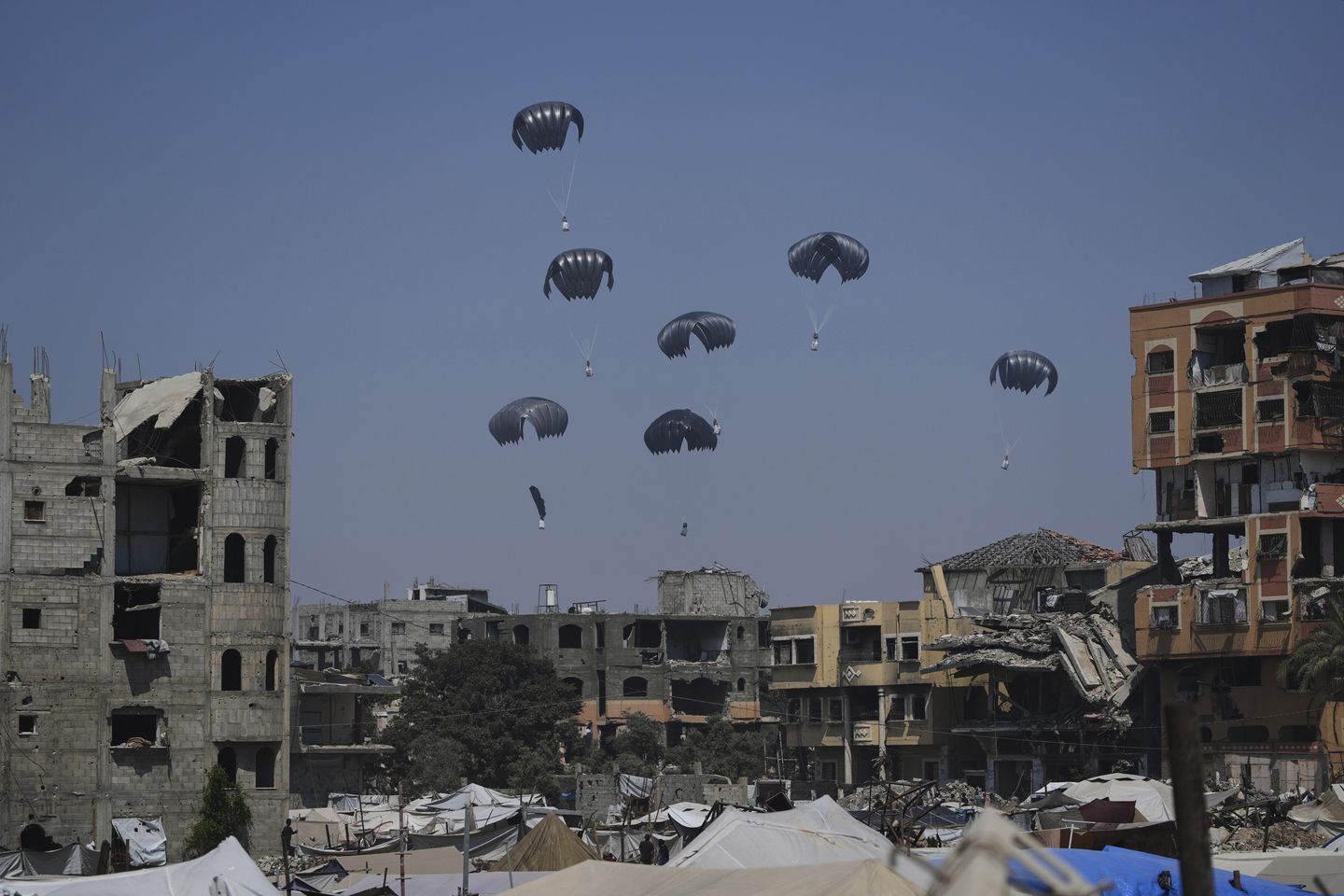
The Israeli military has initiated limited daily pauses in fighting across three populated areas within Gaza. These “tactical pauses” are scheduled for 10 hours each day and aim to facilitate increased humanitarian aid to the region, addressing growing concerns about widespread hunger. These actions come as Israel faces mounting international criticism regarding its conduct throughout the 21-month war.
The military specified that the pauses will occur in Gaza City, Deir al-Balah, and Muwasi – all densely populated areas. Running from 10:00 a.m. to 8:00 p.m. daily, the pauses are intended to remain in effect until further notice. The overarching goal is to permit a greater flow of essential humanitarian supplies into the territory.
Israeli Prime Minister Benjamin Netanyahu acknowledged the necessity of allowing “minimal humanitarian supplies” to enter Gaza, regardless of the chosen path forward in the conflict.
Despite the designated pauses, the military emphasized that combat operations would continue otherwise. Health officials in Gaza reported that Israeli strikes resulted in the deaths of at least 41 Palestinians between late Saturday and Sunday, including 26 individuals who were seeking aid.
The distressing images of emaciated children have intensified criticism aimed at Israel, with allies among those calling for an end to the ongoing war. Israel has imposed restrictions on aid reaching Gaza’s population, which exceeds 2 million, alleging that Hamas diverts the aid to strengthen its control. However, Israel has not provided concrete evidence to support these claims. Consequently, a significant portion of the population, confined to increasingly smaller areas, is now heavily reliant on external aid.
Sabreen Hassona, an affected Palestinian, shared her experience: “I came to get flour for my children because they have not tasted flour for more than a week, and thank God, God provided me with a kilo of rice with difficulty.” Her words highlight the dire circumstances faced by many as they struggle to secure basic necessities.
The Israel military reported conducting airdrops of 28 aid packages containing food on Sunday. Additionally, the military announced plans to establish secure routes for aid delivery, coordinating these efforts with the United Nations and other humanitarian organizations.
The U.N. World Food Program asserted that it has sufficient food supplies either within Gaza or en route to feed the entire population for nearly three months. However, the organization has also reported that a third of Gaza’s population has gone without food for days, and nearly half a million people are experiencing conditions akin to famine.
Antoine Renard, the WFP’s country director for the occupied Palestinian territories, stated that approximately 80 WFP trucks entered Gaza. He also noted that over 130 trucks arrived via Jordan, Ashdod, and Egypt, with additional aid moving through the Kerem Shalom and Zikim crossings.
Despite these efforts, Renard emphasized that the current level of aid is insufficient to counteract the “current starvation” crisis effectively.
In July alone, Gaza recorded 63 malnutrition-related deaths, including 24 children under the age of 5, according to the World Health Organization.
Dr. Muneer al-Boursh, Gaza’s Health Ministry director-general, urged for a substantial influx of medical supplies to address the escalating issue of child malnutrition.
“This (humanitarian) truce will mean nothing if it doesn’t turn into a real opportunity to save lives,” Dr. al-Boursh stated. “Every delay is measured by another funeral.”
Efforts toward a broader ceasefire appear to be faltering. Israel and the U.S. recalled their negotiating teams from Qatar, attributing the setback to Hamas. Israel has also indicated that it is considering “alternative options” to the ongoing talks.
Israel maintains that it is prepared to end the war if Hamas surrenders, disarms, and goes into exile, a proposition that the group has consistently rejected.
Senior Hamas official Mahmoud Merdawi suggested that Israel’s shift in approach to the humanitarian crisis reflects an acknowledgment of the starvation affecting Palestinians in Gaza. He further asserted that Israel’s actions are primarily intended to improve its international image rather than genuinely saving lives.
Following the termination of the most recent ceasefire in March, Israel imposed a 2 ½ month block on the entry of food, medicine, fuel, and other essential supplies into Gaza. This measure was reportedly aimed at pressuring Hamas to release hostages. Fifty hostages remain in Gaza, with over half presumed to be deceased.
Facing international pressure, Israel implemented a slight easing of the blockade in May. Since then, approximately 4,500 trucks have been permitted to enter, allowing the U.N. and other organizations to distribute aid. However, the average of 69 trucks per day falls significantly short of the 500 to 600 trucks that the U.N. estimates are necessary.
The U.N. has reported difficulties in distributing much of the aid, citing instances where hungry crowds and gangs seize the supplies directly from the trucks.
As an alternative to U.N.-controlled aid delivery, Israel has supported the U.S.-registered Gaza Humanitarian Foundation, which established four centers in May for distributing food boxes. The U.N. human rights office has reported that over 1,000 Palestinians have been killed by Israeli forces since May while attempting to obtain food, primarily near these distribution sites.
Israel has consistently criticized the U.N., alleging that its system enables Hamas to steal aid. The U.N. denies these allegations and maintains that its system represents the most effective means of delivering aid to Palestinians.
“Gaza is not a remote island. The infrastructure and resources exist to prevent starvation; we just need safe, sustained access,” stated Kate Phillips-Barrasso, Mercy Corps’ vice president of global policy and advocacy.
Awda Hospital in Nuseirat reported that Israeli forces killed at least 13 people, including four children and a woman, and wounded 101 others as they approached a GHF aid distribution site in central Gaza.
Israel’s military stated that it fired warning shots to deter a “gathering of suspects” from approaching within hundreds of meters of the site before it opened. GHF reported no incidents at or near its sites.
Thirteen additional individuals were killed while seeking aid in other areas of Gaza, including northwestern Gaza City, where over 50 people were wounded, and near the Zikim crossing, where over 90 were wounded, according to hospital officials and medics.
Israel’s military announced that two soldiers were killed in Gaza, bringing the total number of Israeli military fatalities to 898 since the Hamas attack on October 7, 2023, which initiated the war. Hamas killed 1,200 people, predominantly civilians, in that initial attack and took 251 hostages.
Israel’s retaliatory offensive has resulted in the deaths of more than 59,700 Palestinians, according to Gaza’s Health Ministry. While the ministry’s count does not differentiate between combatants and civilians, it reports that over half of the fatalities are women and children. The ministry operates under the Hamas government, and the U.N. and other international organizations consider it to be the most reliable source of data on casualties.
President Donald Trump described the images of emaciated and malnourished children in Gaza as “terrible.”
