

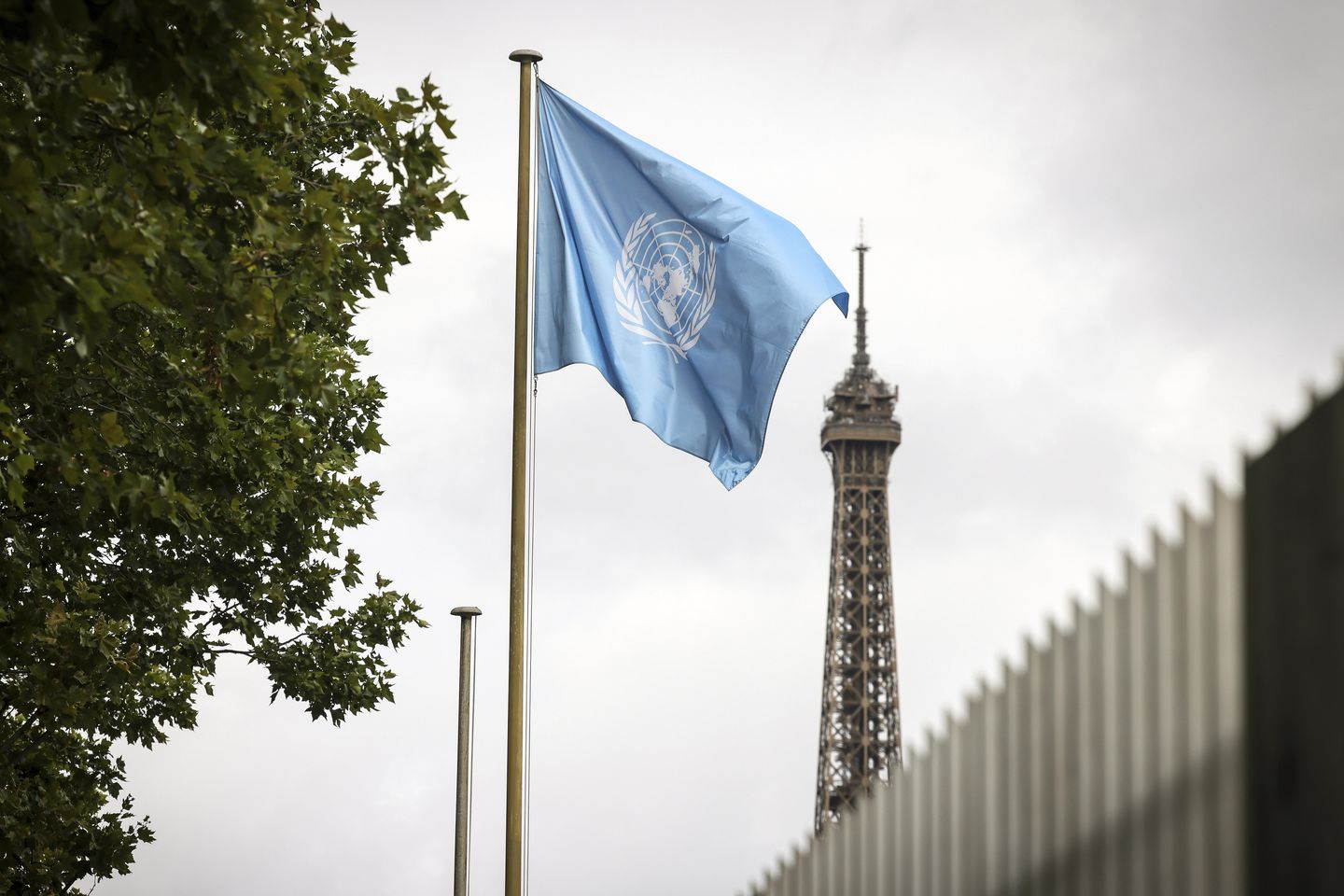
The United States is set to withdraw from the United Nations cultural agency, UNESCO, marking another instance of the nation stepping back from international organizations. This decision, echoing concerns previously voiced, indicates that the U.S. believes its involvement with UNESCO is not in its best national interest and alleges the agency fosters anti-Israel sentiment.
The withdrawal, slated to take effect in December 2026, will impact the agency, particularly its UNESCO World Heritage Sites program. This program designates and protects landmarks of global significance, including iconic sites such as the Taj Mahal, the pyramids of Giza in Egypt, and the Grand Canyon National Park. Beyond heritage preservation, the agency plays a role in advancing education and scientific endeavors worldwide.
This move aligns with a broader strategy to reshape U.S. diplomacy, following an “America First” approach. This strategy has already seen the U.S. withdraw from the U.N. World Health Organization and the U.N.’s top human rights body, alongside re-evaluating funding commitments to other U.N. entities. Consequently, the U.N. is undergoing its own significant restructuring, reassessing its core programs and future direction in light of reduced support from the U.S., historically its largest donor.
According to a State Department spokesperson, the withdrawal is linked to UNESCO’s perceived promotion of “divisive social and cultural causes.” The spokesperson further stated that UNESCO’s 2011 decision to admit the “State of Palestine” as a member state was “highly problematic, contrary to U.S. policy, and contributed to the proliferation of anti-Israel rhetoric within the organization.”
UNESCO Director General Audrey Azoulay expressed deep regret over the U.S. decision, acknowledging that it was anticipated and that the agency had prepared accordingly. She also refuted accusations of anti-Israel bias, arguing that such claims contradict UNESCO’s actual work, particularly its efforts in Holocaust education and combating antisemitism.
Israel’s ambassador to the U.N. welcomed the announcement, characterizing it as a “fitting response to the consistent misguided anti-Israel bias of UNESCO, an organization that has lost its way.”
The Biden administration had previously rejoined UNESCO in 2023, citing concerns that China was filling the void left by the U.S. in UNESCO policymaking, especially in setting standards for artificial intelligence and technology education.
Critics of the withdrawal argue that it undermines international cooperation and U.S. global leadership. They suggest that this decision could allow competitors, particularly China, to further their interests within the international system by taking advantage of America’s absence.
The decision followed a review ordered earlier this year. While the U.S. was once a major contributor to the agency’s budget, UNESCO has diversified its funding sources in recent years as the U.S. contribution has decreased. Currently, American assistance represents only a small percentage of the agency’s total budget.
The U.S. has withdrawn from UNESCO before, in 1984 under the Reagan administration, citing mismanagement, corruption, and the agency’s perceived use to advance Soviet Union interests. It rejoined in 2003 during the George W. Bush presidency.
France, where UNESCO is headquartered, expressed regret over the U.S. decision, emphasizing the agency’s founding mission in 1946 “to prevent conflicts through education, culture and tolerance.”
